
How Your Grow Lights Can Shut You Down In 2026
William Kanistras
2/2/20264 min read
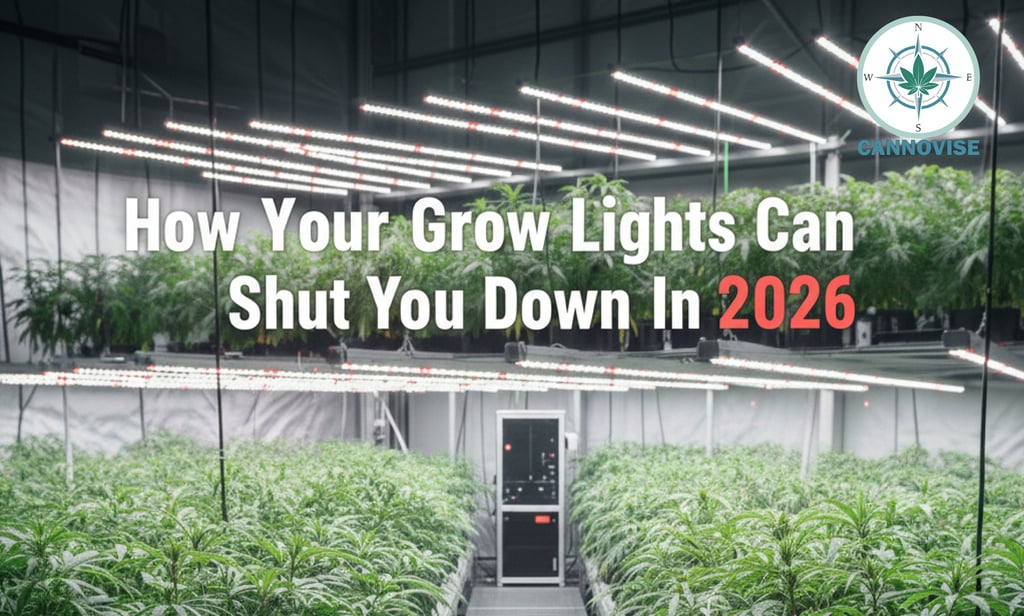
As we move into 2026, grow lighting sits at the center of two regulatory pressures that are only getting tighter. Cannabis regulators are enforcing National Electrical Code requirements, while energy regulators and utilities are pushing efficiency standards that directly affect what equipment can be installed, approved, and incentivized.
This is not theoretical. I see it play out in real facilities where operators are forced into last-minute redesigns, lose access to rebates, or fail inspections over lighting systems that would have passed a year ago. Understanding how NEC rules and energy efficiency regulations intersect is now a core requirement for cannabis cultivation.
Why Lighting Is A Compliance Flashpoint
Indoor cannabis cultivation pushes electrical systems harder than almost any other commercial use case. Lighting runs long hours, draws significant continuous load, and operates in environments that are humid, wet, and frequently modified over time. Historically, inspectors were left to interpret rules written for mainstream industries and apply them to equipment that did not fit neatly into existing categories. That ambiguity allowed inconsistent enforcement, but it also created risk. The industry matured faster than the codes, and now, in 2026, the codes have caught up. Lighting is now treated as specialized equipment operating in a high-risk environment. That shift is driving stricter inspections, clearer expectations, and far less tolerance for improvised or legacy installations.
NEC Article 410 Part XVI Changed The Rules
The single most important development for horticultural lighting compliance is NEC Article 410 Part XVI, which introduced special provisions for horticultural lighting equipment. It recognizes that horticultural lighting is different, and it establishes a dedicated framework for evaluating it. Before this change, many cannabis facilities relied on equipment that was never truly evaluated for permanent installation in wet or humid commercial environments.
Under Article 410 Part XVI, horticultural lighting must be listed for its intended use and installed according to the manufacturer's instructions. This sounds simple, but in practice, it eliminates a large percentage of fixtures that were common in early cannabis grows. Inspectors are looking for products certified to standards like UL 8800, not just general electrical listings that do not account for environmental exposure, cord management, or long-term operational safety.
Corded Fixtures, Wet Locations, And GFCI Reality
One of the most common issues I come across is under-canopy lighting compliance ratings. Many LED grow lights are supplied via flexible cords. In a cannabis grow room, flexible cords almost always exist in what inspectors consider a wet or damp location. Irrigation systems, condensation, foliar spraying, and routine washdowns all contribute to that classification. In these environments, ground-fault protection is not optional. GFCI requirements are enforced far more strictly than in the past, especially when lighting is cord-connected rather than hardwired.
Operators often assume upstream protection meets compliance requirements or that existing installs are grandfathered in. That assumption breaks down quickly during remodels, expansions, or change-of-ownership inspections that are so common in the cannabis industry. If the lighting system cannot clearly demonstrate compliance with GFCI requirements, it becomes a liability.
Installation Plans Were Overlooked
Another shift in enforcement is attention to how fixtures are physically installed. Early cannabis facilities often relied on improvised mounting methods. Zip ties, unapproved hooks, and ad hoc suspension systems were common, especially in rapidly built or converted spaces. That level of informality is no longer acceptable. Inspectors now evaluate mechanical support, strain relief, clearance from irrigation lines, and protection from physical damage. In multi-tier racks and under-canopy installations, scrutiny is even higher.
Energy Efficiency Is A Licensing Issue
Electrical safety is only half of the regulatory equation. Energy efficiency requirements are increasingly dictating what lighting systems can even be installed.
California provides the clearest example through Title 24 and its Controlled Environment Horticulture provisions. These rules establish minimum Photosynthetic Photon Efficacy requirements for grow lights and mandate specific control strategies for high-load cultivation spaces. For operators, this means that lighting decisions are no longer evaluated solely on output or form-factor. Efficacy, controls, and documentation are now just as vital when getting a project approved.
What matters here is not just current compliance but future risk. Fixtures that barely meet today’s minimums may fail to qualify during the next expansion or trigger compliance issues during a permit review. Other states are moving in the same direction, even if the language differs. Some rely on lighting power density limits. Others use performance-based metrics or utility oversight. The trend is consistent. High-energy cultivation facilities are expected to justify their lighting choices.
The Role Of Utilities And Incentives
Even where energy codes do not explicitly mandate high-efficacy lighting, utilities often do. Rebate programs increasingly require Design Lights Consortium horticultural listings. While DLC is not always a legal requirement, it has become a de facto standard for incentive eligibility.
As these DLC requirements increase over time, older fixtures are no longer qualified products. Operators who built around rebate assumptions can find themselves locked out during upgrades or expansions. This matters because incentives are often baked into project economics, and potential fines or delays can tank a facility before it’s even operational.
Enforcement Is Catching Up
One of the biggest misconceptions I encounter is the belief that enforcement will remain inconsistent. In reality, inspectors are better trained, code language is clearer, and regulators are under increasing pressure to address energy consumption and safety in cannabis facilities. What passed five or ten years ago is no longer a reliable benchmark. Facilities that have not upgraded or documented their systems often discover compliance gaps when it matters most.
Cut sheets, listings, control narratives, and electrical documentation are no longer administrative overhead. They are operational safeguards. When inspectors, utilities, or insurers ask questions, having answers readily available can be the difference between approval and delay.
My Perspective
Grow lighting sits at the intersection of plant performance, electrical safety, and energy regulation. That intersection is now heavily regulated, and the margin for error is nonexistent. Operators who treat lighting as a long-term infrastructure decision rather than a commodity purchase are better positioned to navigate inspections, control costs, and avoid disruptive retrofits.
Compliance is about building correctly, documenting thoroughly, and understanding where the regulatory landscape is headed rather than where it has been. As the industry matures, lighting is no longer just a cultivation choice. It is a compliance strategy.
Your partner in cannabis compliance and operations.
info@cannovise.com
© 2025. All rights reserved.